For over a decade, Wealthbox has helped financial advisors manage relationships with clarity and confidence. It has become the CRM that firms rely on to capture conversations, coordinate teams, and keep all client details in one place. It’s a system of record.
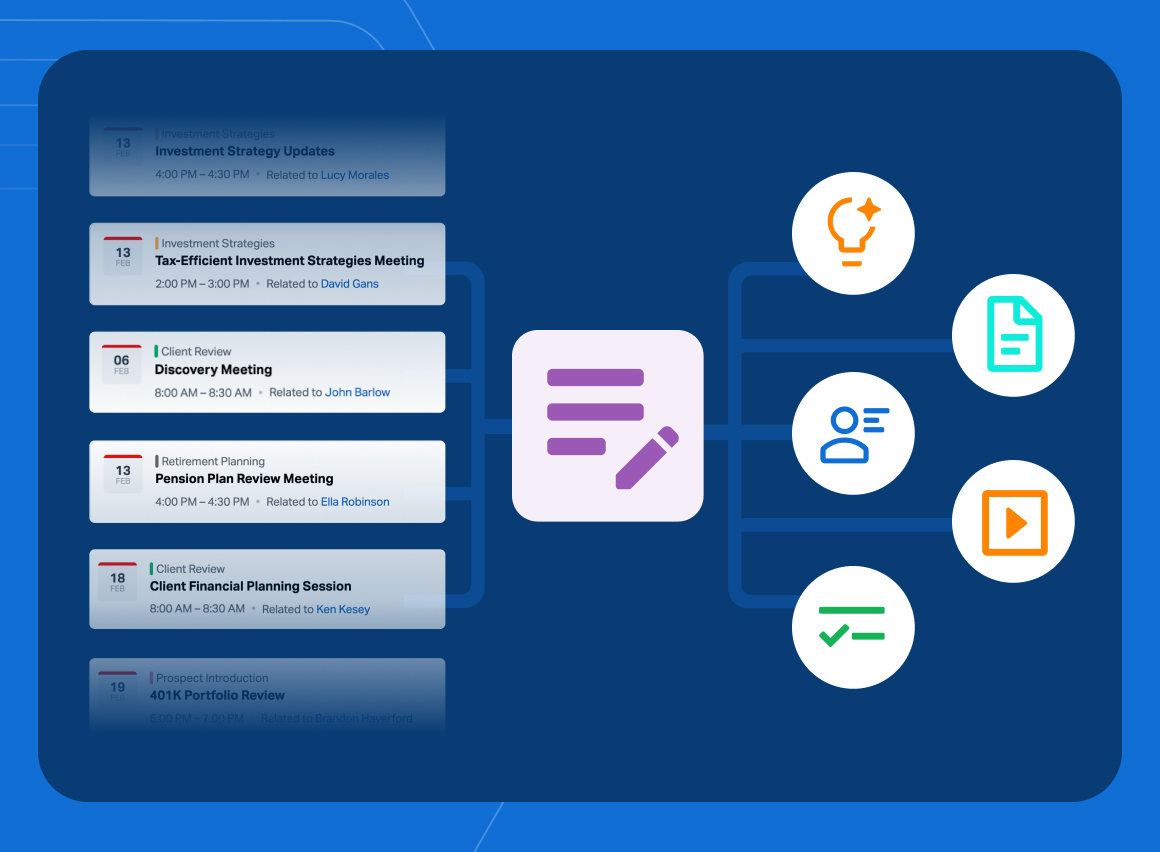
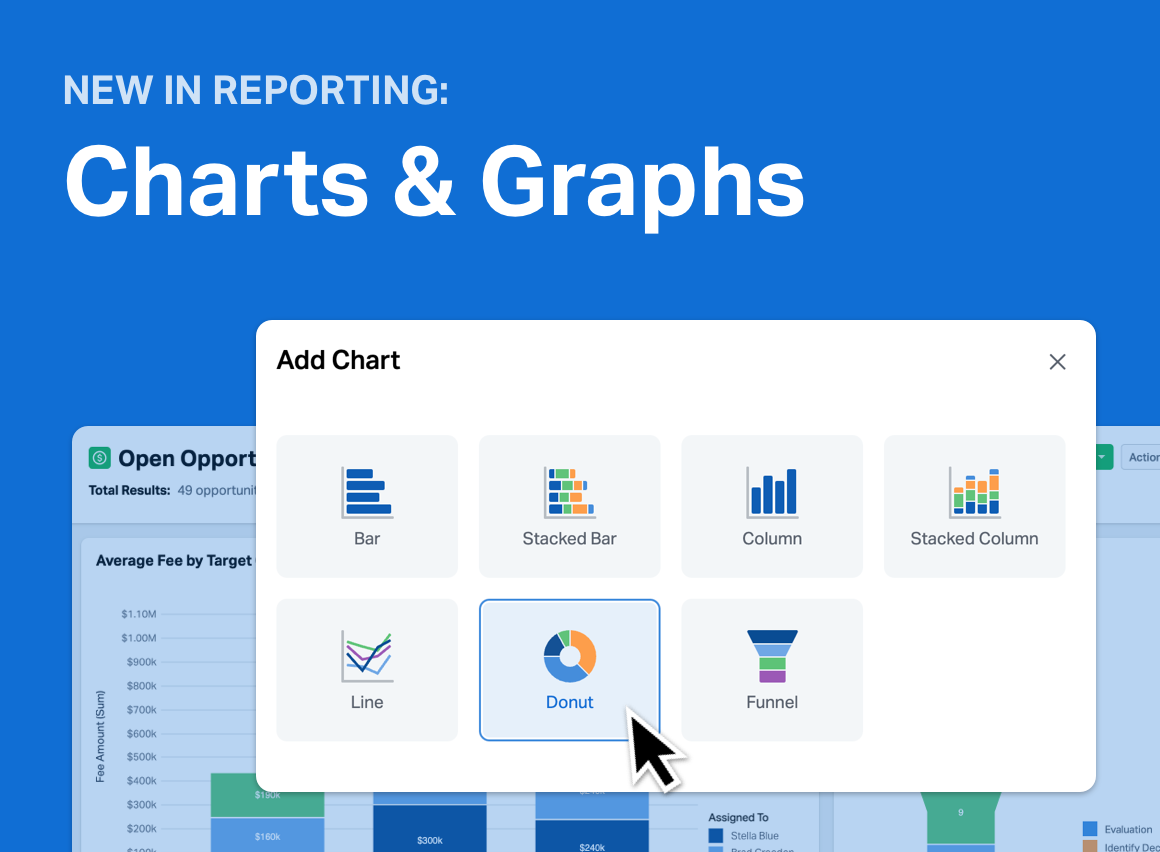
Over the past year, we’ve been doing something bigger: adding a new layer to that system of record, a system of action. We launched AI-powered Reports to help advisors surface insights from their data without having to build custom queries. Then we released the Wealthbox AI Notetaker, which captures real-time meeting conversations and generates summaries.
Today, we announced the next step in Wealthbox’s ongoing AI evolution: a new layer of intelligence made available by agents that doesn’t just analyze your practice; it helps you run it.
How Wealthbox AI Works, and Why It Matters
There are a lot of AI tools entering the wealthtech space right now. Some sit on top of your tech stack. Some live in separate apps. Some pull your data through APIs and try to make sense of it from the outside.
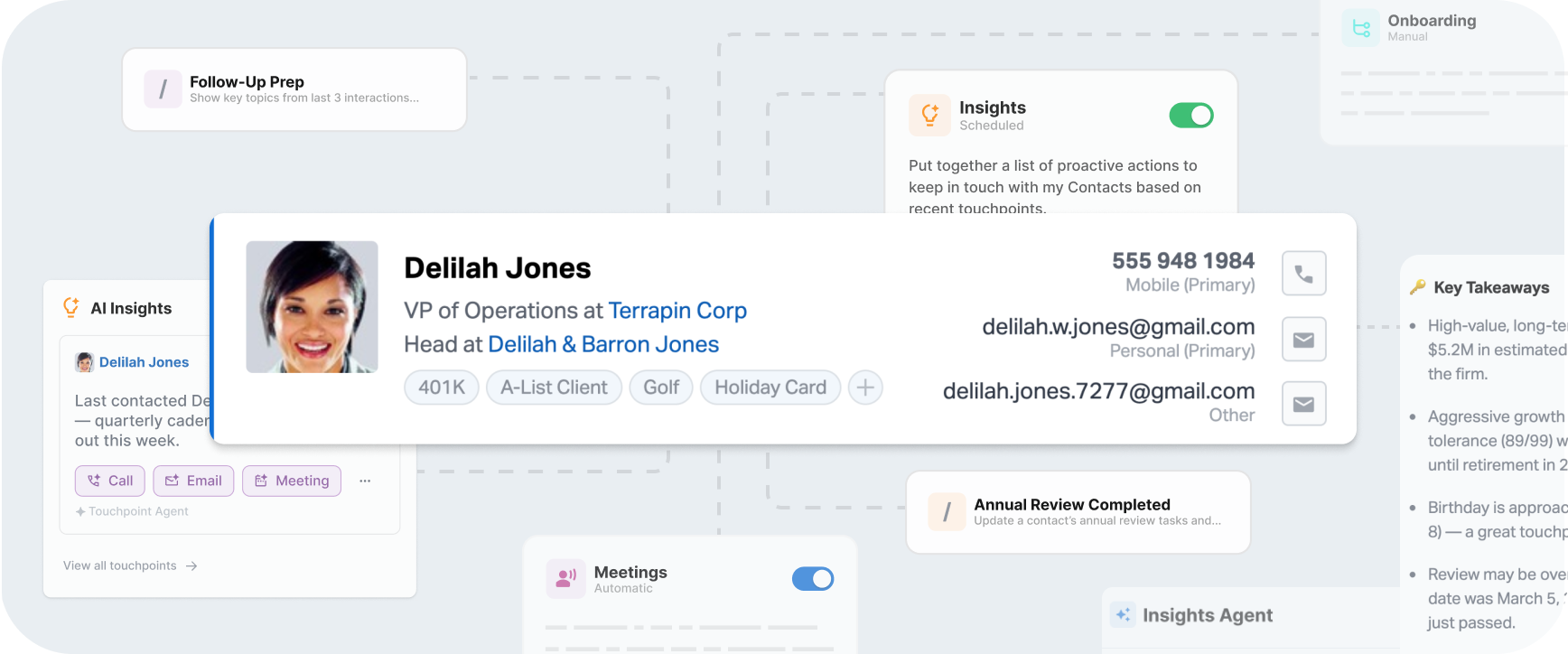
We took a different approach. We built Wealthbox AI directly inside the system of record, because that’s where it can actually do something.
AI is powerful at reasoning, interpreting, and generating. But it can’t enforce a compliance policy, maintain an audit trail, or execute a multi-step workflow on its own. It needs to live within a trusted infrastructure. Execution liability has to live somewhere. For financial advisors, it lives in the system of record. An AI layer that can suggest but can’t execute inside a governed system, that can summarize but can’t maintain an audit trail, isn’t carrying the weight that advisory firms actually need carried. When AI operates inside the system of record, every action it takes is logged, auditable, and compliant by default. Execution liability doesn’t float above the stack. It lives somewhere specific. That level of transparency and governance is what allows firms to adopt AI with confidence and bring it into their daily operations.
The client relationship is still fundamentally human, AI doesn’t change that. What it changes is the leverage each advisor has. It handles the preparation, the follow-through, the pattern recognition, and the administrative weight, so the advisor can spend more time doing the thing that actually grows a practice: being present with clients.
The platforms that will matter most going forward are the ones that own canonical client data, encode real business logic, and carry the weight of execution. Advisors have years of client history, established workflows, compliance requirements, and team processes embedded in their systems. A tool that reads your data through an API sees a snapshot. The system that holds your data sees the full picture: every relationship between contacts and households, every in-flight workflow, every note and conversation in context, updated in real time. By making the infrastructure you already depend on more intelligent, firms can unlock far more value from the systems already at the center of their practice.
As AI takes on more responsibility inside your practice, governance becomes more important, not less. Every action Wealthbox AI takes runs through the same permissions, workflows, and audit infrastructure that advisors already trust. This ensures AI operates within the same transparent and compliant framework that already supports advisory firms.
The Evolving Wealthbox AI
New Wealthbox AI features, available soon through an early access program, are built directly into the platform, not layered on through a third-party API. That’s not a technical distinction. It’s the difference between AI that can suggest and AI that can do.
Because intelligence operates inside Wealthbox, it has the complete picture: every note, every task, every workflow, every relationship. It doesn’t need to sync data across APIs with hours-old snapshots. It operates on the real thing, in real time, with the full context of your practice. And because every action executes inside the system of record, it’s logged, auditable, and compliant by default. That’s where execution liability belongs. System of record meets system of action.
This is also what makes the intelligence genuinely useful rather than generic. The years of client relationships, practice workflows, and institutional knowledge already inside Wealthbox are the fuel. An AI model is only as good as the data it operates on, and the data inside your CRM, the full history of how you serve your clients, is uniquely yours. That history is what makes every recommendation, every drafted email, and every surfaced insight relevant to your practice and your clients. It’s yours, and now it works for you.
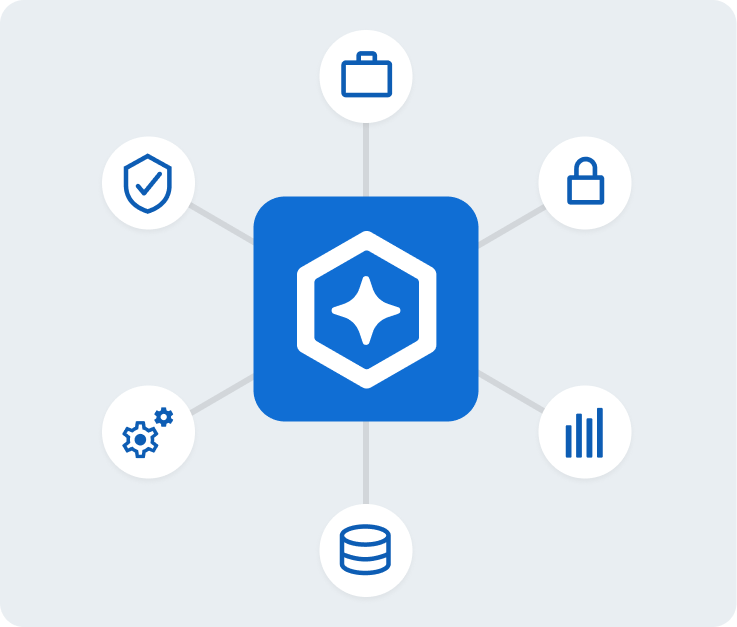
Advisors don’t operate in a single tool. They work across financial planning software, portfolio management systems, custodial platforms, compliance tools, and more. That’s not going to change, and it shouldn’t. The question isn’t whether you need coordination across your tech stack, because you do. The question is where the intelligence and governance should live. We believe it lives in the system that already holds your client relationships, your compliance infrastructure, your team’s workflows, and extends outward from there. Not in a layer that sits above everything and owns nothing.
As Wealthbox continues to deepen its integrations with complementary technology tools, wealthtech partners, and data services, Wealthbox AI will be able to coordinate action across that broader ecosystem, not just within the CRM, but across the systems advisors rely on every day. The CRM becomes the hub. The intelligence radiates outward.
Introducing Wealthbox Agents
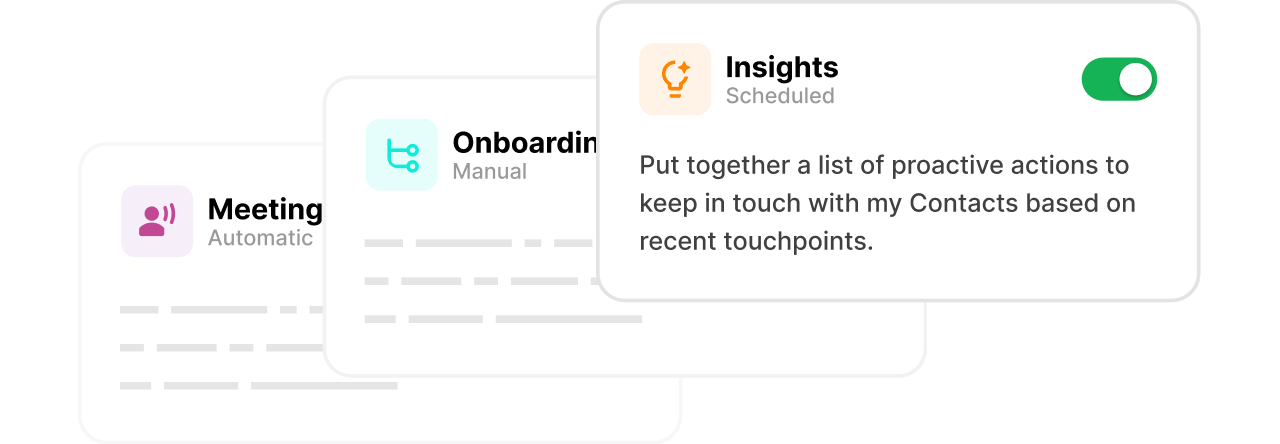
Wealthbox Agents, now releasing in an early access program, are autonomous processes that run in the background without being asked. You don’t need to trigger them manually or prompt them each time. You set them up, and they work on their own, monitoring your book, taking action, and keeping your practice running while you focus on clients.
Agents can run on a schedule (like a customized daily briefing delivered at 6 AM) or respond to triggers (like a contact being updated or a task going overdue). They operate inside your system of record, in real time, on the complete picture of your practice.
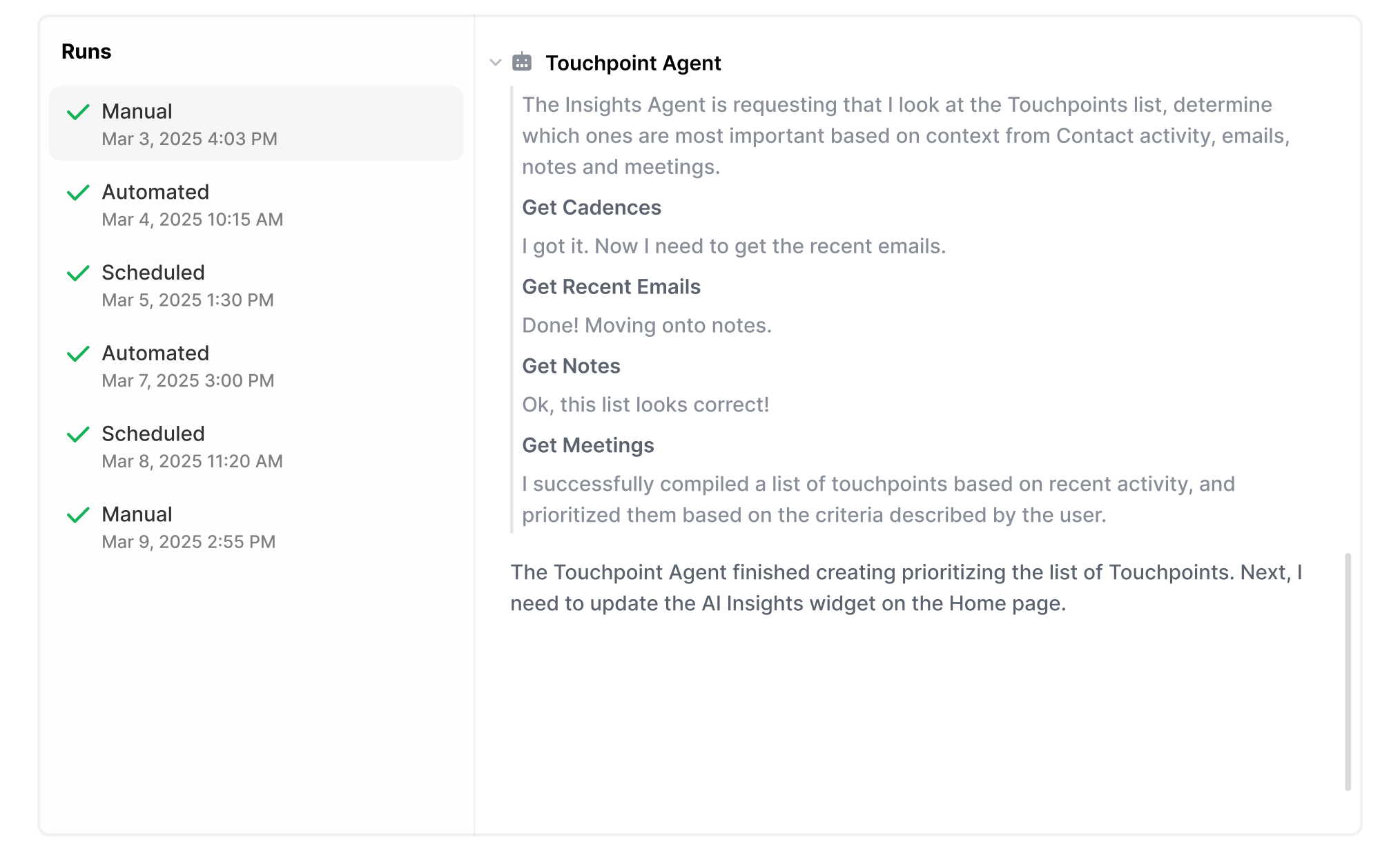
The difference between Agents and a traditional automation tool is intelligence. Agents don’t just follow rules. They understand context, work with your full client history, and make decisions grounded in your actual practice data. The result is that Wealthbox becomes more responsive and more aware of your firm’s workflows. Instead of simply storing information, Wealthbox becomes an active participant in helping you execute consistently, serve clients proactively, and scale your practice with confidence. When nothing falls through the cracks, clients feel it. They get the follow-up call on time, the birthday acknowledgment, and the proactive outreach at the right time. The advisor experience improves, and the client experience improves with it.
Introducing Playbooks: Saved Prompts You Run on Demand
If Agents are the things that run themselves, Playbooks are the things you run when you’re ready.
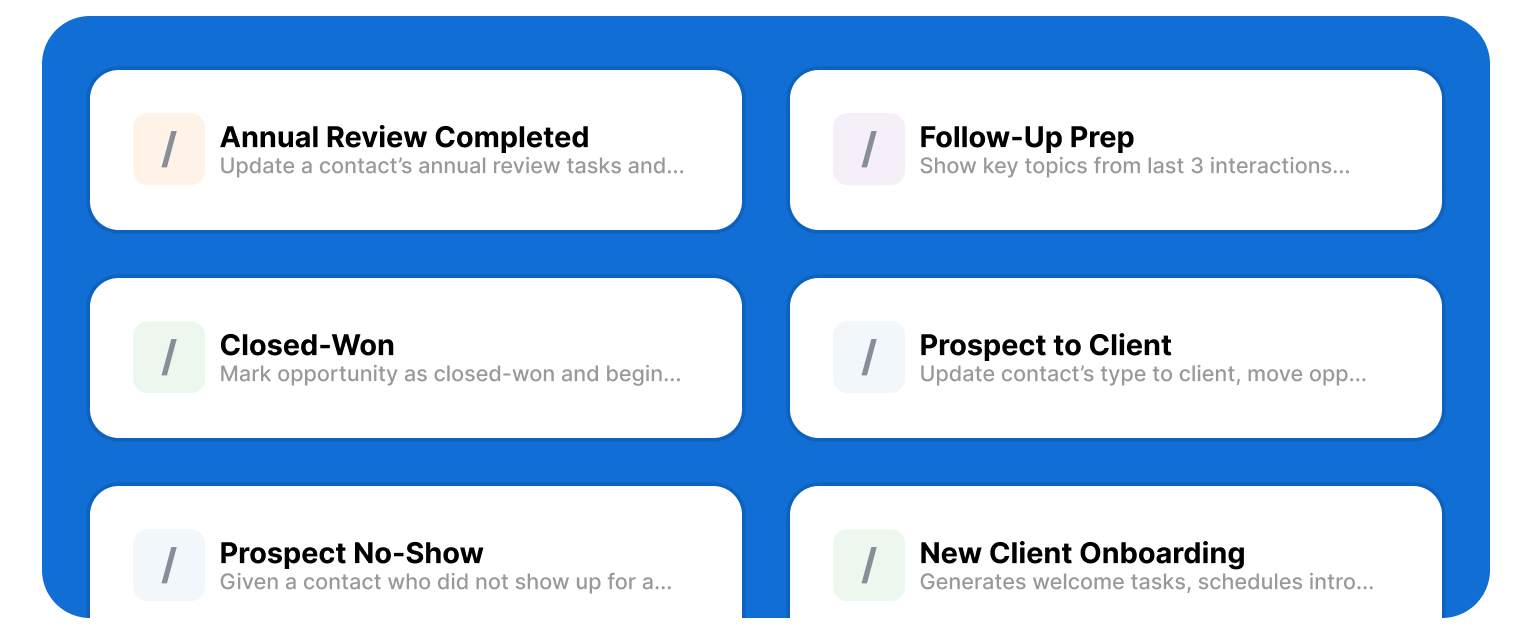
Playbooks in Wealthbox are saved prompts that you can execute with a single click. Instead of typing the same request into the AI Assistant over and over, you save it as a Playbook and run it whenever you need it. Over time, your Playbook library becomes the operating manual for your practice, powered by intelligence that understands your data.
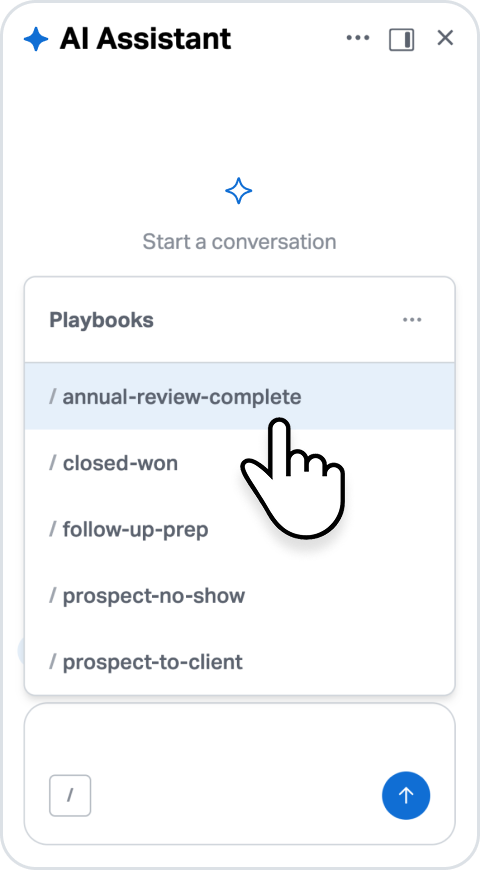
A few examples of what Playbooks look like in practice:
- New client onboarding: generates welcome tasks, schedules introductory meetings, and preps account documentation
- Follow-up prep: pulls a client’s history, flags discussion topics, and drafts the agenda
- Annual review complete: sets the Last Review Date and Annual Review Date fields, completes open events and tasks, and schedules next year’s annual review events and tasks
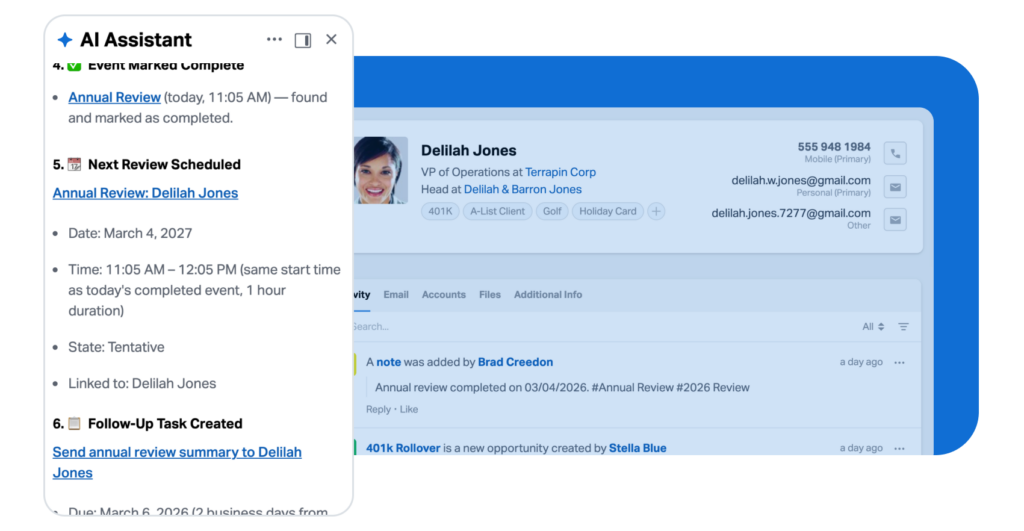
You define the Playbook. You decide when to run it. The AI handles the execution.
AI Assistant: Your Practice, In Conversation
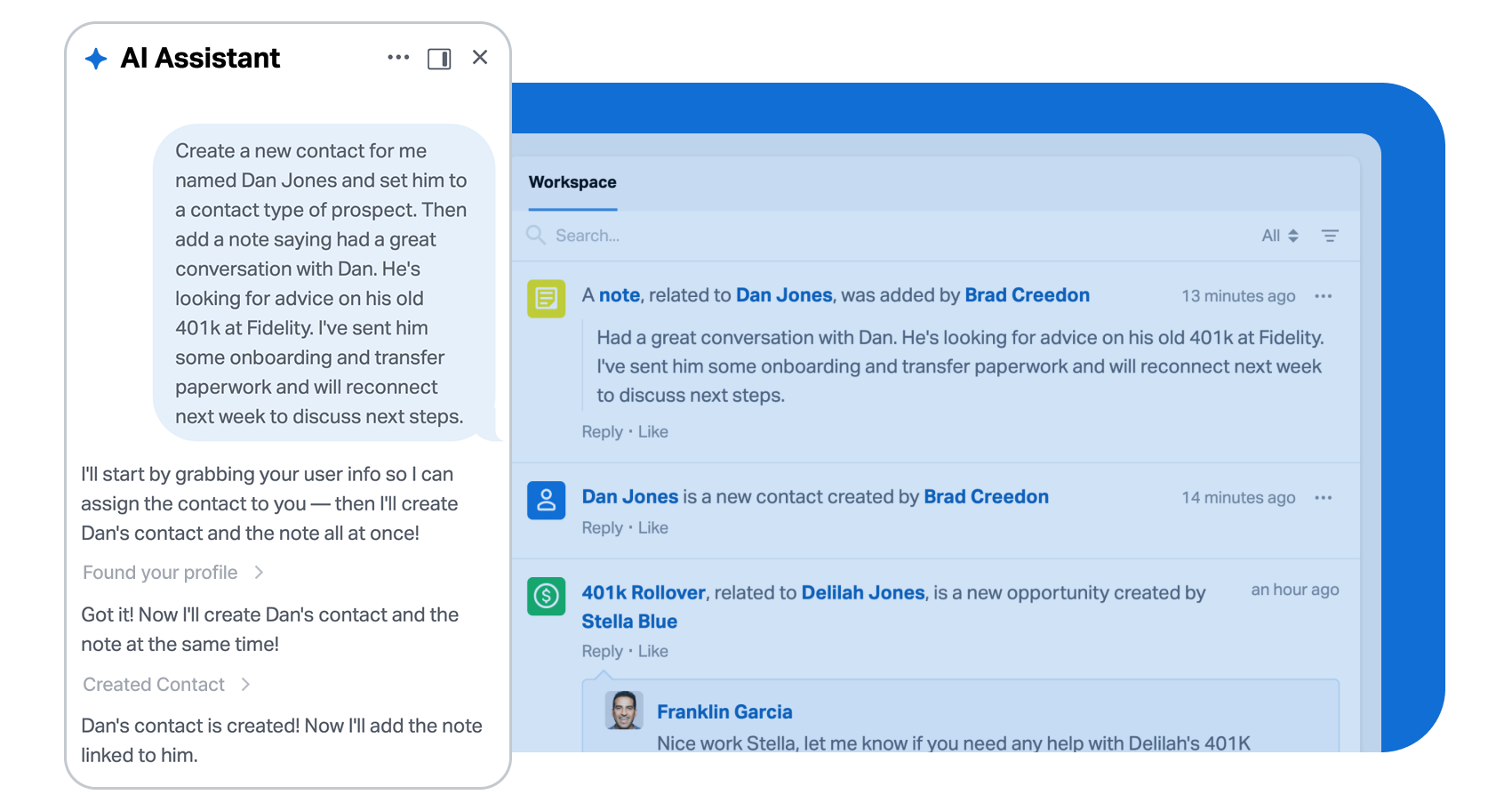
Alongside Agents and Playbooks, the new Wealthbox AI functionality includes a conversational AI Assistant that lets you ask your CRM anything.
The AI Assistant understands your entire practice because it operates on the data itself. Not a sync. Not a snapshot. Not a read-only API connection. It can surface insights about a client, household, pipeline, or patterns across your book in seconds, eliminating the need to click through multiple screens. Preparing for a meeting takes just moments, with the Assistant bringing together recent notes, open tasks, household context, and upcoming milestones. It can even draft emails tailored to a specific client’s history, making it easier to act quickly and confidently.
As Wealthbox continues expanding its ecosystem, the Assistant is designed to evolve alongside it. Today, it works across your CRM data. Over time, it will help advisors move seamlessly between conversations, tasks, communications, and the broader technology stack that supports their firm, bringing the same intelligence and governance to every tool in the workflow.
When the Assistant is ready to take an action, like creating a task or drafting a communication, it shows you what it’s about to do and asks for confirmation before writing anything to your CRM. You stay in control of what happens to your data.
Get Early Access
We’re opening early access for Wealthbox AI today. Sign up below to be among the first to see Agents, Playbooks, and the AI Assistant in action, and see what happens when Wealthbox goes beyond being a place you go to record what happened and starts being the place that helps you decide what to do next.
Advisors don’t need to rip out their tech stack and start over to get the benefits of AI. They need the system they already trust to start working harder for them and for their clients. That’s what Wealthbox AI delivers.